
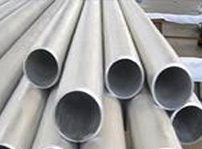
Corrosion eats through piping systems faster than most engineers expect. In chloride-heavy environments, the damage accelerates. That is where 316 seamless tube earns its place in specification documents across chemical plants, offshore platforms, and pharmaceutical facilities. The molybdenum content in this grade gives it a measurable edge over standard austenitic options. That difference shows up in service life.
316 seamless tube is manufactured without a weld seam, which eliminates the weakest point found in welded alternatives. The extrusion and piercing process produces a uniform grain structure throughout the tube wall. That matters in high-pressure service and cyclic loading where weld-adjacent zones tend to crack first. For applications where integrity cannot be compromised, seamless is the default specification.
What Molybdenum Actually Does Inside The Alloy
Chloride pitting and crevice attack: Grade 316 contains between 2% and 3% molybdenum by weight. That addition changes how the passive oxide layer behaves when chloride ions are present. In 304 stainless, chlorides break down the chromium oxide film at localized points, creating pits that deepen quickly under stagnant conditions. Molybdenum stabilizes the passive layer and raises the pitting resistance equivalent number to roughly 23 to 28, depending on exact composition.
Temperature and concentration thresholds: Molybdenum does not make 316 immune to chlorides. Concentrated hydrochloric acid will still attack this grade aggressively. The practical benefit sits in moderate chloride concentrations at temperatures below about 60°C. Above that range, engineers often step up to duplex grades or nickel alloys like 625. Knowing where 316 stops performing well is just as useful as knowing where it excels.
316 Versus 316l And Why The “L” Matters
Carbon content and sensitization risk: Standard 316 allows up to 0.08% carbon. Grade 316L caps carbon at 0.03%. That small difference determines whether carbide precipitation occurs in the heat-affected zone during welding. When carbon runs high, chromium carbides form at grain boundaries between roughly 425°C and 870°C. This pulls chromium out of the surrounding matrix and creates zones that corrode preferentially. Engineers call this sensitization.
When to specify each grade: If the finished assembly requires welding and will operate in corrosive service, 316L is the safer call. For components that see no welding or that undergo full solution annealing after fabrication, standard 316 works fine. Many mills produce dual-certified material that meets both 316 and 316L requirements. That gives procurement teams flexibility without carrying separate inventory for each grade.
Specifications That Govern The Purchase Order
ASTM standards and what they cover: Three ASTM specifications come up most often. A213 covers seamless tubes for heat exchangers and boilers. A269 applies to general-service seamless and welded tubing. A312 covers seamless and welded pipe in larger diameters. Each specification carries different testing requirements, dimensional tolerances, and hydrostatic test pressures. Calling out the wrong spec on a purchase order creates problems during inspection and commissioning.
Dimensional and tolerance details: Seamless tubing in 316 is available in outside diameters from roughly 6 mm up to 168 mm, with wall thicknesses spanning light-gauge instrument tubing to heavy-wall process piping. Tolerance bands tighten as the application moves from general mechanical service to instrumentation. ASTM A269, for instance, holds tighter OD and wall tolerances than A312 for comparable sizes.
Where It Shows Up In Real Installations
- Heat exchangers in chemical plants where chloride-bearing cooling water contacts tube surfaces on the shell side
- Pharmaceutical process lines that require full drainability and internal surface finishes below 0.8 µm Ra
- Marine hardware and desalination system piping exposed to seawater splash zones
- Food and beverage processing where frequent CIP cycles use alternating acidic and caustic wash solutions
- Instrumentation tubing runs on offshore oil and gas platforms
A note on surface finish: Many of these applications call for specific internal surface conditions. Pharmaceutical tubing often requires electropolished ID surfaces to prevent bacterial adhesion and biofilm growth. The seamless manufacturing process gives fabricators a cleaner starting point compared to welded tubing, which may carry residual weld flash or heat tint on the bore.
Selection Mistakes That Cost Time And Money
Overspecifying when 304 would work: Not every corrosive environment needs 316. In freshwater systems with low chloride content, 304 performs well and costs less per foot. Specifying 316 “just in case” adds material cost without a matching performance benefit. The decision should come from actual process fluid analysis, not from habit or outdated spec templates carried over from a previous project.
Ignoring process temperature in the material decision: A system that handles mild chlorides at ambient temperature behaves very differently at 80°C. Pitting rates climb sharply with temperature. A grade that passed laboratory corrosion testing at 25°C may fail within months at elevated service temperatures. Always match material selection to the worst-case operating condition, not the design case average.
The Line Between Good Enough And Right
Picking a tube grade is a balance between performance, cost, and lead time. 316 seamless tube fills a wide middle ground between commodity 304 and expensive nickel alloys. It handles moderate chlorides, resists pitting in most atmospheric conditions, and welds cleanly in the L variant. The mistakes tend to happen at the edges of that performance envelope. Engineers either underspec and face early failures, or overspec and spend budget on alloy they did not need. Process data, not assumptions, should drive that call.
