
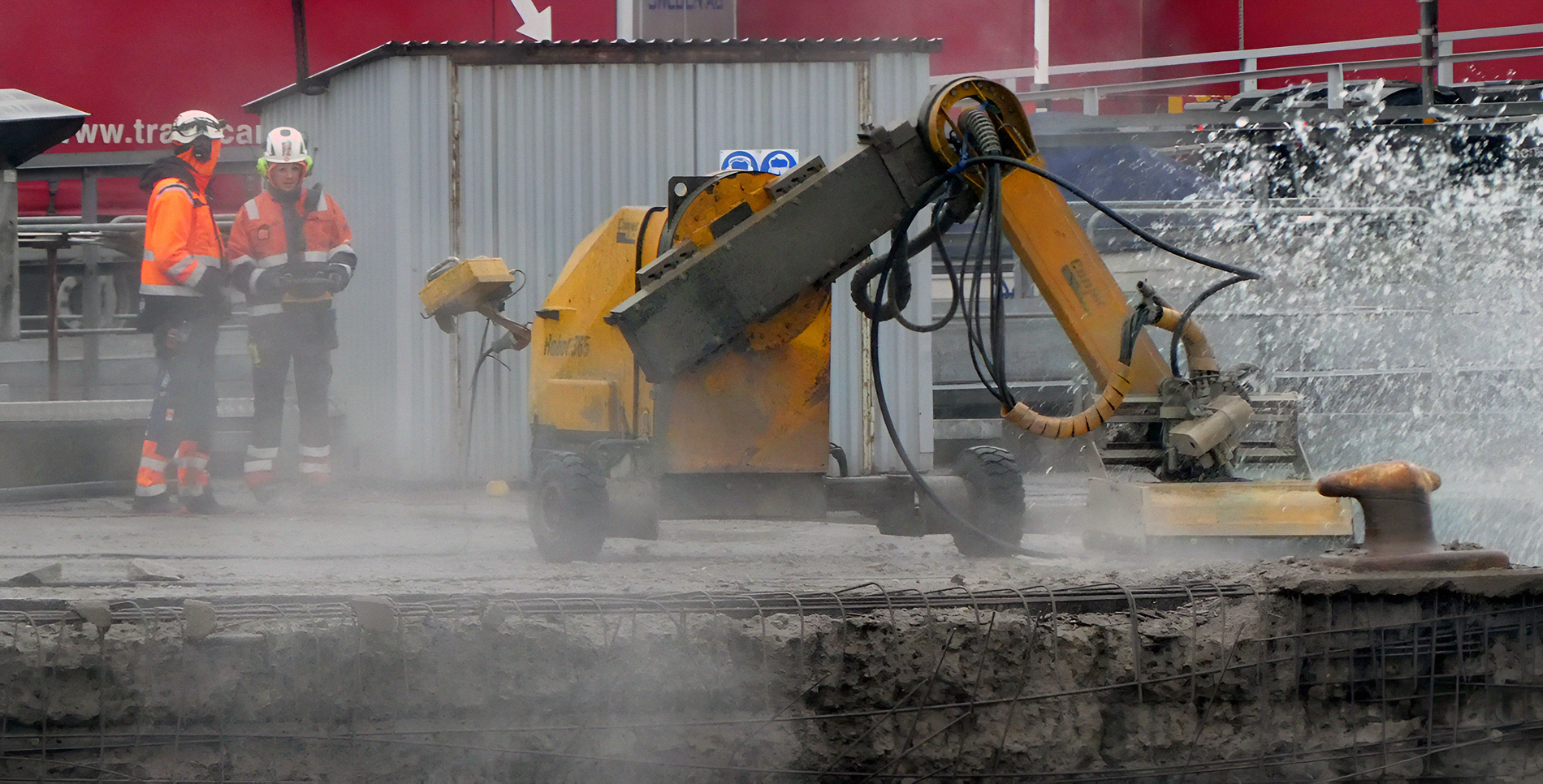
Removing damaged or deteriorated concrete is an important part of many construction, infrastructure repair, and renovation projects. Traditional demolition methods often rely on mechanical equipment such as jackhammers, breakers, and saws to break concrete into smaller pieces. While these methods can be effective, they may also create vibration, noise, and unwanted damage to surrounding structures. Hydro demolition offers an alternative by using ultra-high-pressure water to remove concrete in a controlled and targeted manner.
This technique is particularly useful for projects where damaged concrete needs to be removed while preserving the underlying reinforcement or surrounding structural elements. Instead of relying on direct mechanical impact, hydro demolition uses the force of pressurised water to break down and separate deteriorated concrete. The process can help prepare surfaces for repairs, expose reinforcement, and remove concrete from complex or difficult-to-access areas.
Understanding the science behind this method helps explain why it is used in infrastructure maintenance, bridge repairs, industrial facilities, and other specialised construction applications. From water pressure and surface erosion to equipment selection and waste management, several factors determine how the process works and where it is most suitable.
What Is Hydro Demolition?
Hydro demolition is a concrete removal technique that uses high-pressure or ultra-high-pressure water jets to break down and remove concrete. The equipment directs a concentrated stream of water towards the concrete surface, gradually removing the material through controlled erosion and the development of internal stresses.
Unlike conventional mechanical demolition, which uses physical impact to fracture concrete, this method relies on water pressure to weaken and remove the targeted material. It can be used to remove deteriorated concrete while helping preserve sound surrounding concrete and, in suitable applications, existing steel reinforcement.
The technique is commonly used in structural rehabilitation and concrete repair projects where accurate removal is important. It can also be applied to areas where traditional equipment may create excessive vibration or make it difficult to achieve the required surface condition.
The Science Behind Ultra-High-Pressure Water
The effectiveness of what hydro demolition is and how it works comes from the interaction between pressurised water and the internal structure of concrete.
Concrete is a hardened composite material made from cement, aggregates, and water. Although it is strong under compression, it contains pores, microscopic cracks, and small spaces between its components. When a concentrated water jet strikes the surface, water can enter these openings and exert pressure within the material.
As the water continues to interact with the concrete, several processes contribute to its removal:
- Surface impact: The concentrated water jet strikes the concrete with significant force.
- Water penetration: Pressurised water enters pores, cracks, and other small openings.
- Internal pressure: Water pressure acts within existing weaknesses and contributes to the separation of concrete particles.
- Material breakdown: Weakened and deteriorated concrete begins to break apart.
- Controlled removal: The water jet continues removing material until the required depth and surface condition are achieved.
The result is a process that can remove concrete without depending on repeated mechanical blows.
How Does the Hydro Demolition Process Work?
Hydro demolition involves several stages, from initial inspection to the removal and collection of concrete debris. Each stage is important for achieving the required result while maintaining appropriate safety and quality controls.
1. Initial Concrete Inspection
Before work begins, the concrete structure is assessed to determine the condition of the material and the extent of removal required. The inspection helps identify deteriorated areas, cracks, exposed reinforcement, and sections that need to remain intact.
Project requirements also determine the required removal depth and the condition of the surface after demolition. This information helps the contractor select suitable equipment and establish an appropriate removal method.
2. Equipment and Pressure Selection
Hydro demolition systems use specialised pumps, hoses, nozzles, and water delivery equipment to produce a concentrated jet. The operating pressure and water flow rate depend on the concrete condition, removal depth, equipment specifications, and project requirements.
Different applications require different settings. The contractor must consider the strength and condition of the concrete, the required removal rate, and the need to protect surrounding materials.
3. Directing High-Pressure Water Jets
Once the equipment is prepared, the water jet is directed towards the concrete surface. Depending on the project, operators may use handheld equipment or automated robotic systems.
The water penetrates weaknesses in the concrete and progressively removes the targeted material. Robotic equipment can provide consistent movement and controlled coverage across larger surfaces, while specialised handheld equipment may be suitable for selected areas and more detailed work.
4. Removing Damaged Concrete
As the water jet moves across the surface, deteriorated concrete is broken down and separated from the remaining structure. The process can expose reinforcing steel and create a textured concrete surface that may be suitable for subsequent repair work.
One important advantage is the potential to retain sound concrete and existing reinforcement when the process is correctly designed and controlled. However, the actual result depends on the concrete condition, reinforcement arrangement, and operating technique.
5. Collecting Water and Concrete Debris
Hydro demolition produces a mixture of water and removed concrete material. This mixture needs to be collected and managed appropriately throughout the project.
Depending on the site requirements, contractors may use water recovery systems, containment equipment, and suitable waste separation methods. Proper management helps prevent uncontrolled runoff and supports responsible disposal of removed material.
6. Surface Inspection and Preparation
After concrete removal, the exposed surface is inspected to confirm that the required material has been removed. The contractor may also assess the condition of the remaining concrete and reinforcement before the next stage of construction or repair.
Where required, additional cleaning or preparation may be completed before new concrete or repair materials are applied.
Where Is Hydro Demolition Used?
Hydro demolition is used in a range of construction and infrastructure applications where controlled concrete removal is required.
Bridge and Infrastructure Repairs
Bridges and other infrastructure structures are exposed to traffic loads, weather conditions, moisture, and environmental deterioration. Over time, sections of concrete may become damaged and require removal before repairs can be completed.
Hydro demolition can help remove deteriorated concrete from bridge decks, supporting structures, and other reinforced concrete elements while reducing the vibration associated with conventional impact-based methods.
Road and Pavement Rehabilitation
Concrete roads and pavements may develop damaged sections that need to be removed and replaced. Hydro demolition can be used for selected concrete removal applications where controlled material removal is important.
Industrial Facilities
Industrial structures often contain reinforced concrete elements, machinery foundations, and specialised structural components. Hydro demolition may be suitable when concrete needs to be removed around existing equipment or reinforcement without introducing unnecessary mechanical impact.
Structural Concrete Repairs
Buildings, car parks, tunnels, and other reinforced concrete structures may require repairs when concrete deterioration affects their condition. Hydro demolition can help remove damaged sections and prepare the remaining surface for repair materials.
Key Advantages of Hydro Demolition
Hydro demolition offers several potential benefits compared with conventional mechanical concrete removal methods.
- Reduced mechanical vibration: Water-based removal does not rely on repeated mechanical blows, which can help reduce vibration transmitted through a structure.
- Controlled concrete removal: Equipment settings and movement can be adjusted to target specific areas and removal depths.
- Reinforcement preservation: When correctly applied, the process can remove surrounding concrete while helping retain existing reinforcing steel.
- Suitable repair surface: The process can produce a textured surface that may support bonding with new repair materials, subject to the project’s preparation requirements.
- Access to complex areas: Specialised equipment can be used for selected structural areas where conventional demolition may be difficult.
- Reduced mechanical impact: Avoiding direct impact can be beneficial when working near sensitive structural components.
The suitability of these benefits depends on the project conditions, equipment, operator experience, and required finish.
Hydro Demolition vs Traditional Concrete Demolition
Both hydro demolition and traditional mechanical demolition are used to remove concrete, but their operating methods are different.
| Comparison | Hydro Demolition | Traditional Mechanical Demolition |
| Removal method | High-pressure water jets | Mechanical impact or cutting |
| Vibration | Generally lower mechanical vibration | Can generate significant vibration |
| Reinforcement | Can help preserve existing steel reinforcement | May damage or expose reinforcement through impact |
| Surface finish | Can produce a textured surface | May leave fractured or uneven surfaces |
| Equipment | Specialised pumps, hoses, and water jets | Breakers, jackhammers, and demolition equipment |
| Waste management | Requires water and concrete slurry collection | Produces solid concrete debris and dust |
The most appropriate method depends on the structure, project requirements, site conditions, and overall demolition plan.
Safety Considerations During Hydro Demolition
Although hydro demolition avoids some risks associated with mechanical impact, it involves high-pressure equipment that requires specialised training and strict safety procedures.
Ultra-high-pressure water jets can cause severe injuries if they come into contact with the body. Operators must use appropriate protective equipment and follow established operating procedures. Work areas should be controlled to prevent unauthorised access, and equipment should be inspected regularly for damage or leaks.
Important safety considerations include:
- Using suitable protective clothing and equipment.
- Maintaining safe distances from operating water jets.
- Inspecting hoses, connections, pumps, and nozzles.
- Establishing exclusion zones around work areas.
- Managing water runoff and concrete slurry.
- Ensuring operators receive appropriate training.
- Following site-specific risk assessments and safety procedures.
Proper planning and experienced operators are essential for maintaining safe working conditions.
Conclusion
Hydro demolition is a specialised concrete removal technique that uses high-pressure water jets to break down and remove deteriorated concrete. By relying on water pressure rather than repeated mechanical impact, it offers a controlled approach that can be particularly useful for reinforced concrete structures requiring careful rehabilitation.
The science behind the method involves concentrated water impact, penetration into existing concrete weaknesses, and the progressive separation of deteriorated material. With suitable equipment and operating conditions, contractors can remove targeted concrete sections while helping preserve surrounding sound material and existing reinforcement.
The technique has applications across bridge repairs, infrastructure maintenance, industrial facilities, road rehabilitation, and structural concrete restoration. Its potential benefits include reduced mechanical vibration, controlled removal, and the creation of a textured surface for subsequent repair work. However, successful results depend on correct equipment selection, experienced operators, effective waste management, and appropriate safety procedures.
Understanding how hydro demolition works makes it easier to assess whether the method is suitable for a particular concrete repair project. When accurate removal and protection of surrounding structural elements are important priorities, it can provide a valuable alternative to conventional mechanical demolition.
