
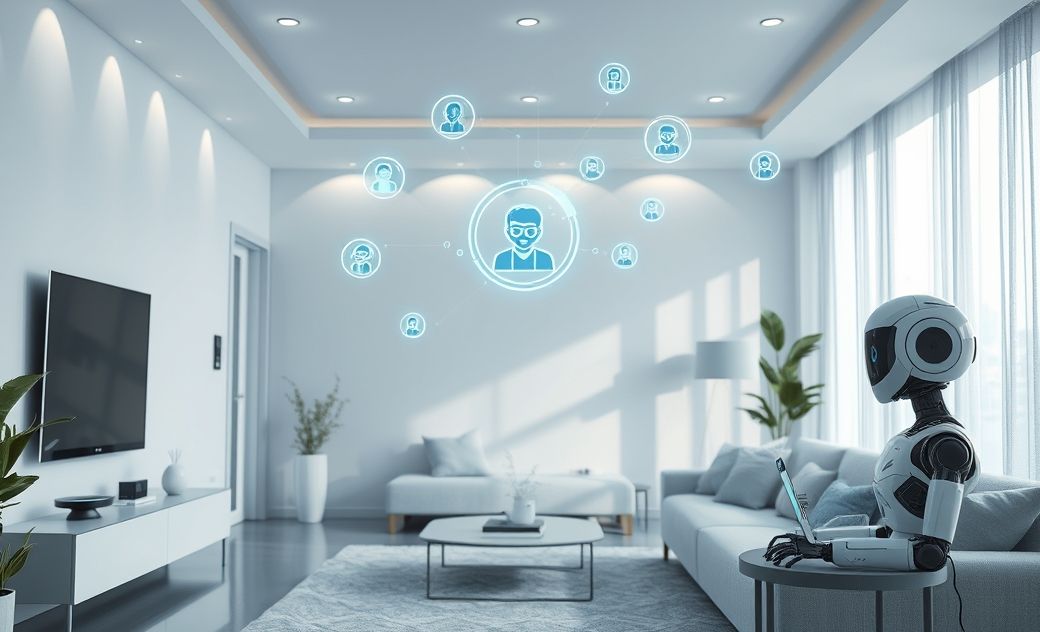
Artificial Intelligence (AI) assistants have significantly transformed the way we interact with technology. They have transitioned from simple voice command systems to multifunctional tools that help with daily tasks, provide personalized experiences, and even anticipate user needs. As we look to the future, the development of AI assistants promises even greater advancements, potentially surpassing the capabilities of current technologies like Siri and Alexa.
The future of AI assistants is set to transform how businesses operate, and Textie AI is at the forefront of this revolution. As AI continues to evolve, Textie AI enables businesses to automate tasks with greater precision, offering tools like intelligent chatbots, automated workflows, and real-time data analysis.
Improved Natural Language Processing
Natural Language Processing (NLP) has been a cornerstone in the evolution of AI assistants. Future developments in NLP will allow AI systems to understand and respond to human speech with even greater accuracy. This means more nuanced understanding of context, emotions, and colloquialisms, making interactions feel more natural and human-like.
Contextual Awareness
Future AI assistants will be capable of more sophisticated contextual awareness, understanding not just the words spoken but their intent based on previous interactions and real-world scenarios. This will enable AI to offer more accurate and contextually relevant responses.
Multilingual Capabilities
While current AI assistants support multiple languages, future systems will break language barriers more seamlessly, allowing for real-time translations and interactions in multilingual environments without losing context or meaning.
Advanced Personalization
As AI technology advances, assistants will offer more personalized experiences by learning individual preferences and habits over time. This personalization will extend beyond simple reminders and recommendations to proactive assistance that enhances user productivity and lifestyle.
Predictive Assistance
AI systems will increasingly anticipate user needs before they are explicitly stated, based on patterns and behavior analysis. For example, your assistant could suggest leaving earlier for an appointment due to traffic conditions or propose meal ideas based on your dietary history.
Integration with Health Technologies
Future AI assistants are expected to integrate closely with health monitoring devices, providing health insights, reminders for medication, and even suggesting lifestyle changes to promote well-being based on continuous health data tracking.
Enhanced Interactivity and Multi-modal Interfaces
The interaction with AI assistants will no longer be limited to voice commands. Future developments will include multi-modal interfaces, where users can interact through voice, touch, gestures, and even eye movements, offering a seamless user experience that is adaptable to various situations.
Virtual Reality and AI Integration
The integration of AI and virtual reality (VR) will create immersive environments where AI assistants can act as guides, instructors, or companions, enhancing the interactivity and utility of both technologies.
Emotional Intelligence
An emerging trend is the development of AI with emotional intelligence, capable of recognizing and responding to the user’s emotions. This advancement will allow AI assistants to provide support in a more empathetic and understanding manner, strengthening human-AI relationships.
Security and Privacy Considerations
As AI assistants become more deeply integrated into our lives, concerns around security and privacy become paramount. Future AI systems will have to address these challenges more effectively to ensure that personal data is protected and used ethically.
Decentralized Technology
Decentralized AI models could provide solutions by storing data locally on devices rather than on centralized servers, thereby reducing privacy risks and giving users more control over their information.
Advanced Authentication Methods
Enhanced security measures such as biometrics and blockchain technology will be employed to safeguard sensitive information and provide secure interactions with AI assistants.
The future of AI assistants extends far beyond what we experience today with Siri and Alexa. With progress in natural language processing, personalization, interactivity, and security, AI assistants will become indispensable tools in our daily lives, providing a seamless blend of support, information, and companionship. As we move forward, embracing these innovations will be key to harnessing the full potential of AI in ways that enhance and enrich our lives.
