
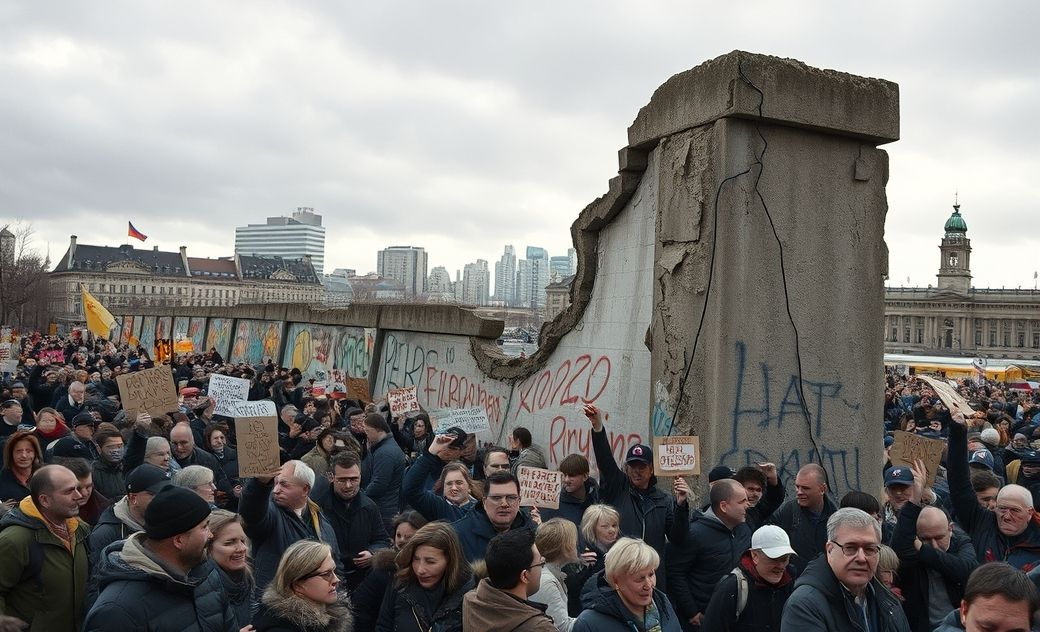
The fall of the Berlin Wall stands as a pivotal moment in history, marking the end of the Cold War and symbolizing the triumph of democracy and freedom over division and oppression. Understanding the causes and effects of this historic event is key to comprehending the shifts in political, social, and economic landscapes of the late 20th century. Through examining these dynamics, we can better appreciate how the dismantling of a physical barrier led to profound changes across the globe.
Causes of the Fall of the Berlin Wall
Political Pressures
Throughout the late 1980s, political pressures within Eastern Europe began to mount, leading to significant changes. The Soviet Union, under the leadership of Mikhail Gorbachev, introduced reforms such as Glasnost (openness) and Perestroika (restructuring), which inadvertently encouraged demands for more freedom in satellite states, including East Germany. These reforms signaled a softening of governmental control, which emboldened citizens to push against repressive regimes.
Public Protests
Protests played a crucial role in the movement leading up to the fall. In East Germany, public demonstrations increased in frequency and size, particularly in Leipzig and Berlin. These protests, fueled by desires for freedom and unification, became too significant for the government to ignore. The authorities’ inability to quell these demonstrations without force highlighted a weakening regime losing its grip on power.
Economic Strain
Economic difficulties plagued East Germany, exacerbating public discontent. The closed-off system resulted in stagnation and shortages, while the West flourished. Faced with a deteriorating economy, the East German government could no longer sustain itself without change. The yearning for economic opportunity and prosperity in the West intensified the populace’s demand for reform and ultimately contributed to the pressure on the wall.
Effects of the Fall of the Berlin Wall
Reunification of Germany
The most immediate and visible effect of the Berlin Wall’s fall was the reunification of Germany. Within a year, East and West Germany were formally united on October 3, 1990. This reunification not only restored national identity but also facilitated the integration of East Germany into a broader European and global context, helping to drive forward political changes across the continent.
End of the Cold War
The fall of the Berlin Wall is often seen as a symbol of the broader collapse of Communist regimes across Eastern Europe, marking the end of the Cold War. With the dismantling of the wall, ideological and military tensions eased, leading to significant global political realignment. This pivotal shift paved the way for new international relationships and a focus on democratization and economic cooperation.
Social and Cultural Changes
The dismantling of the Berlin Wall unleashed a wave of social and cultural transformations, not only in Germany but across Europe. People experienced new freedoms, such as the ability to travel and exchange ideas freely. This cultural unification prompted exchanges of knowledge, art, and education, enriching societies previously divided by ideology and physical barriers.
Conclusion
The fall of the Berlin Wall is a landmark event whose significance extends beyond the reunification of Germany. It represents a turning point in world history, where the power of collective human will overcame oppression. This moment reshaped the geopolitical landscape and continues to influence modern societal structures today. By studying the causes and effects of this historic event, we can better appreciate the world we live in and draw lessons for future generations.
