
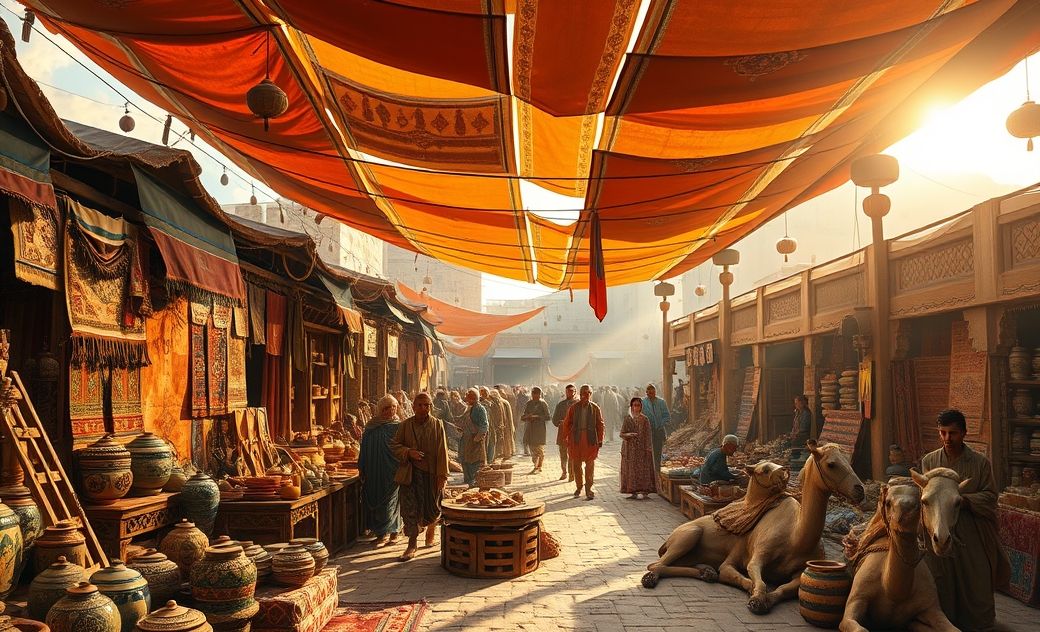
Throughout history, the Silk Road has been a significant conduit for cultural, economic, and political exchanges between the East and West. Spanning over 7,000 kilometers, this network of trade routes played a crucial role in shaping the ancient world. Its impact went beyond the mere exchange of goods, deeply influencing global cultural interactions.
The Origins of the Silk Road
Established during the Han Dynasty in China around the 2nd century BCE, the Silk Road was initially a trade route between China and the Mediterranean. The primary commodity was silk, a highly coveted material among the elites of Rome and beyond, but other goods, including spices, precious metals, and stones, also traversed this route.
Cultural Exchange Along the Silk Road
Art and Architecture
The Silk Road facilitated the exchange of artistic techniques and styles. As traders and travelers moved between cultures, they shared and adopted new artistic influences that permeated art and architecture across different regions. For instance, the Greco-Buddhist art form, a blend of Greek and Buddhist elements, emerged in regions such as Gandhara (modern-day Pakistan and Afghanistan).
Language and Literature
Languages and literary works spread as travelers and traders interacted along the Silk Road. This exchange led to the introduction of new vocabularies and the translation of significant texts, fostering intellectual growth. The spread of Sanskrit, for example, contributed to cross-cultural literary and philosophical exchanges in Central Asia.
Religious Ideals
The Silk Road was instrumental in spreading religious beliefs, including Buddhism, Zoroastrianism, Christianity, and Islam. Buddhism, in particular, found fertile ground along these routes, with many monasteries emerging to support travelers. This facilitated the spread of Buddhist teachings from India to East Asia.
Economic Impacts of the Silk Road
The economic impact of the Silk Road was immense. It connected economies and allowed regions to flourish by facilitating trade. The exchange of goods led to increased wealth and the development of cities along the route, turning them into bustling economic centers. These urban centers further supported cultural and intellectual exchanges, creating a symbiotic relationship between trade and culture.
Technological Transfers
The Silk Road was also a channel for technological innovations. Inventions such as papermaking, printing, and gunpowder found their way from China to the West through these trade routes. These technologies had profound impacts on societies, contributing to advancements in communication, education, and warfare.
The Decline and Legacy of the Silk Road
The decline of the Silk Road began with the fall of the Mongol Empire and the rise of maritime trade routes. However, its legacy remains significant, influencing global connections for centuries. The cultural exchanges that occurred along the Silk Road laid the foundation for modern globalization by fostering an environment where diverse ideas and practices could coexist and evolve.
Conclusion
The Silk Road was much more than a simple trade route—it was a bridge between cultures that transformed societies. Its role in shaping global cultural exchanges is still evident today, reminding us of the interconnectedness of human civilization. By understanding the Silk Road’s history, we gain insight into how diverse cultures have interacted and influenced each other throughout history, continuing to shape our world’s cultural landscape.
