
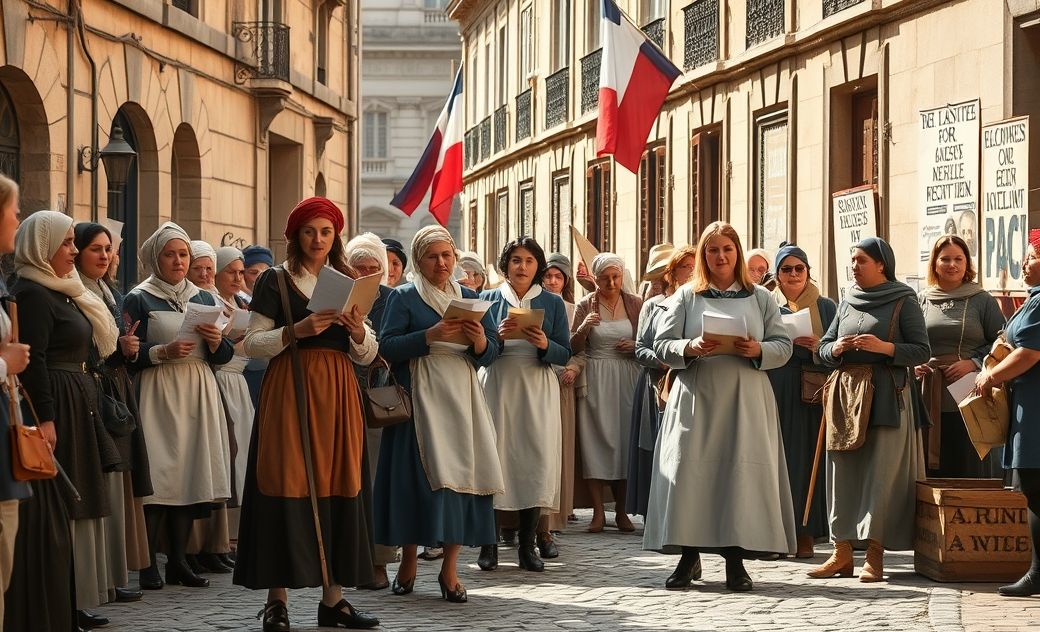
The French Revolution, a period of radical socio-political change from 1789 to 1799, is often associated with iconic male figures like Maximilien Robespierre and Napoleon Bonaparte. However, women also played crucial roles in the revolution, contributing significantly to the cause and pushing the boundaries of their societal roles at the time. While many immediately think of Marie Antoinette, whose execution became a symbol of revolutionary justice, numerous other women were influential in shaping revolutionary France. This article explores the diverse and impactful roles women had during this transformative period.
Women as Political Activists
The political activism of women during the French Revolution was unprecedented. Women were deeply involved in demanding political rights and reforms. Organizations led by women, such as the Society of Revolutionary Republican Women founded by Pauline Léon and Claire Lacombe, provided platforms for women to assert their views and influence revolutionary politics.
The March on Versailles
Among the most significant events was the Women’s March on Versailles in October 1789. Thousands of women, driven by economic hardship and empowered by a sense of political agency, marched from Paris to the royal palace in Versailles. Their demand for bread and political reform forced King Louis XVI to return to Paris, symbolizing a pivotal moment of women’s direct action influencing the course of the revolution.
A New Political Sphere
Despite their significant contributions, women still faced limitations in gaining formal political representation. Olympe de Gouges emerged as a figure advocating for women’s rights through her writings, including the Declaration of the Rights of Woman and of the Female Citizen, which challenged male authority and gender inequality. Her work laid foundational ideas that inspired future movements for gender equality.
Economic Contributions and Challenges
Amidst the revolution, women continued to fulfill essential economic roles. They were instrumental in maintaining food supplies, managing small businesses, and even participating in labor strikes, which were often motivated by both economic grievances and political aspirations.
Shaping the Revolutionary Economy
Women’s engagement in market activities was vital to revolutionary Paris. As primary food shoppers and as sellers in local markets, they often acted as intermediaries between rural producers and urban consumers. Their participation evidenced their central role within the revolutionary economy, both as consumers and contributors.
Economic Hardships
However, women faced considerable hardships as well. The instability of the economy during the revolutionary years led to scarcities and pervasive inflation, which heavily impacted their livelihoods. Women navigated these challenges while simultaneously managing their increased political involvement, making their contributions all the more remarkable.
Cultural and Social Influence
The French Revolution also saw women engaging in cultural shifts, influencing public opinion and participating in the vibrant salons of Paris. These salons, led by women, were intellectual hubs that facilitated discussion and debate, shaping revolutionary thought and culture.
Salonnières and Intellectual Contribution
Prominent salonnières like Madame Roland, played critical roles in catalyzing political thought and activism. Their salons offered strategic venues for socializing across class lines and genders, thereby spreading revolutionary ideas and fostering supportive networks for political engagement.
Legacy and Representation
The involvement of women in the revolution was a touchstone for future gender dynamics in France. While their formal medicals rights remained limited during the period, the social changes driven by these women’s actions laid the groundwork for subsequent feminist movements.
In conclusion, the French Revolution was a multifaceted movement significantly influenced by the contributions of women. Beyond the well-documented life of Marie Antoinette, women’s roles as activists, economic participants, and cultural influencers were indispensable to the transformation that revolutionized France. Their courage and persistence in the face of societal norms and economic difficulties highlight the vital, yet often untold, contributions to history’s most powerful revolutions.
